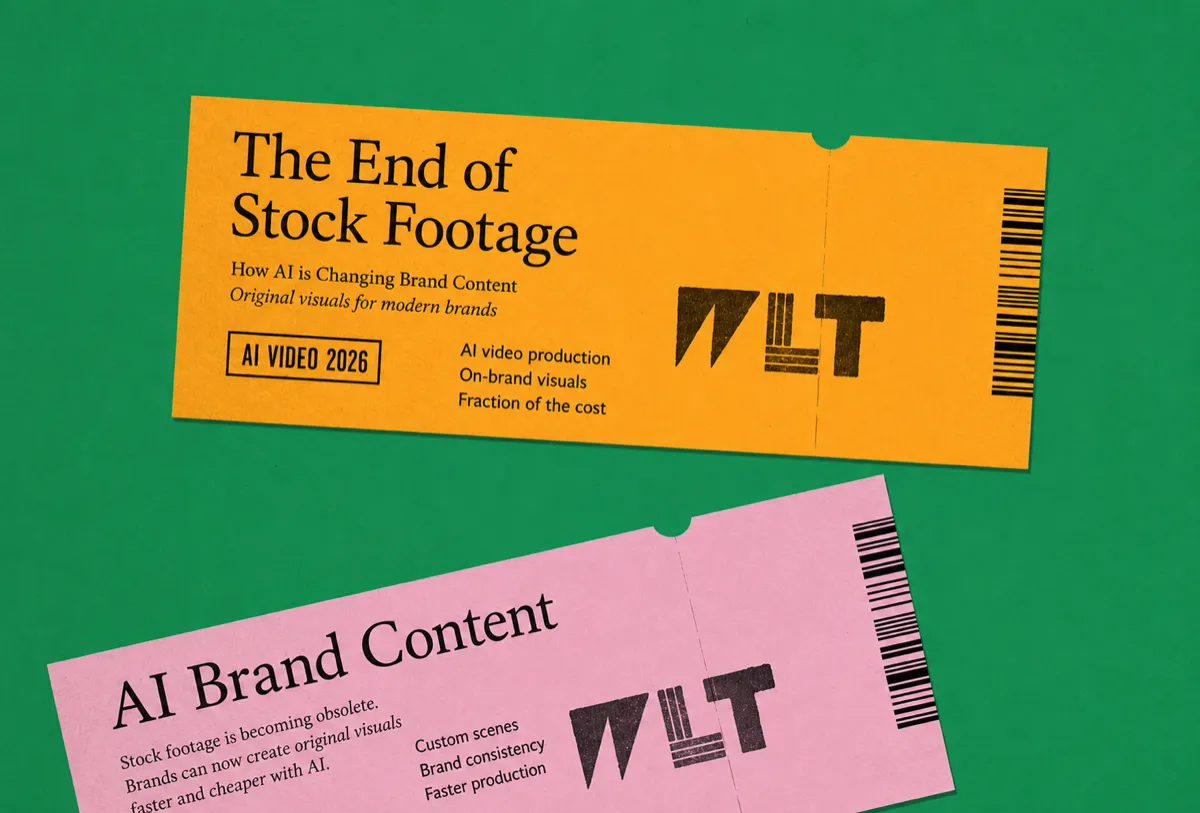
Stock footage served a purpose for two decades. But in 2026, the economics and quality of AI-generated video have made it largely unnecessary. Shutterstock, Adobe Stock, and Getty have all launched AI generation tools within their own platforms, acknowledging the shift.
What Is Wrong with Stock
Designed to be forgettable
Stock footage is made to be reusable, which means it is made to be generic. Your competitor can license the same clip tomorrow. In a feed where differentiation is everything, generic visuals are a liability.
AI-Generated vs Stock: The Numbers
100%
Original to you
$0
Licensing fees
Minutes
To source, not hours
Current generation models (Sora, Kling 2.0, Veo 2, Runway Gen-4) produce footage with cinematic depth of field, natural lighting, and realistic motion. For b-roll, product environments, and atmospheric shots, AI output is already indistinguishable from stock, and it is infinitely more customizable.
Market Adoption
Adobe reported in Q1 2026 that searches for "AI-generated" assets on Adobe Stock grew 400% year over year. Shutterstock's AI generation tool now accounts for 18% of all new asset downloads on the platform. The market is voting clearly.
Stock footage will not disappear overnight. It still has value for real-world footage of identifiable locations and historical content. But for the majority of brand video, custom AI is faster, cheaper, more on-brand, and entirely yours.
How to Make the Switch
Identify your stock dependency
Look at your last 10 video projects. How many used stock? What did the licensing cost? Could those shots have been described in a prompt?
Test AI on your next b-roll need
Take one upcoming project and generate the b-roll with AI instead of sourcing stock. Compare quality, cost, and turnaround.
Build a prompt library
Document the visual descriptions that match your brand. Consistent lighting, color palettes, environments. These become your reusable assets.